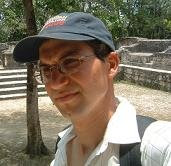
I just went to a poetry reading by Philip Levine. Up in his 80s it was hard for him to escape identifying with his age. Still Levine read and delivered some fine poems, cracked some jokes, and kept the audience's attention with a bit of profanity mixed in.
Here is a sample from his poem "Two"
"And the lovers?" you ask. I wrote nothing about lovers.
Take a look. Clouds, trucks, traffic lights, a diner, work,
a wooden shoe, East Moline, poached eggs, the perfume
of frying bacon, the chaos of language, the spices
of spent breath after eight hours of night work.
Can you hear all I feared and never dared to write?
Why the two are more real than either you or me,
why I never returned to keep them in my life,
how little I now mean to myself or anyone else,
what any of this could mean, where you found
the patience to endure these truths and confessions?
Levine's style draws to that which is missing in our souls, and seems to have been stolen by the common objects of life which distracts us.
His second last poem was one on death where he states "and so I will rest, free at last". The whole poem hinted toward death being a time where we can finally escape the images of ourselves which burden us as our own, and obscure whatever it is that is enduring and real in us.
Showing posts with label poetry. Show all posts
Showing posts with label poetry. Show all posts
Thursday, November 13, 2008

Wednesday, November 12, 2008
Jane Hirshfield
Jane Hirshfield is an American poet who has extensively studied zen and served to translate Japanese poems into English.
Her poems have a modern beat to them, with unusual imagery and metaphor, take the line from A Critique of Pure Reason for example:
A dog catching a tennis ball lobbed into darkness
holds her breath silent, to keep the descent in her ears.
When I understand that, I will come back here and blog about it.
The other lines from the poem are good though, and give a nod to her zen background:
Perimeter is not meaning, but it changes meaning,
as wit increases distance and compassion erodes it.
Let reason flow like water around a stone, the stone remains.
This poem reminds us of the times reasoning and convincing arguments just don't work. They don't apply to reality, they don't always solve arguments.
Hirshfield's title for the poem alludes to Kant's Critique of Pure Reason where he asserts all ideas are presentations of sensory experience, and not pure logic alone. The poem itself sheds light on implications of how we treat people and talk to them. What is it that convinces us so thoroughly that our reality is right? Why don't we empathize first and not enter into an argument? The poem is saying we should emphasize emotional aspects to our thoughts and deductions. Well, I don't know how I feel about that. ;)
Click here to get Hirshfield's book: After: Poems
Her poems have a modern beat to them, with unusual imagery and metaphor, take the line from A Critique of Pure Reason for example:
A dog catching a tennis ball lobbed into darkness
holds her breath silent, to keep the descent in her ears.
When I understand that, I will come back here and blog about it.
The other lines from the poem are good though, and give a nod to her zen background:
Perimeter is not meaning, but it changes meaning,
as wit increases distance and compassion erodes it.
Let reason flow like water around a stone, the stone remains.
This poem reminds us of the times reasoning and convincing arguments just don't work. They don't apply to reality, they don't always solve arguments.
Hirshfield's title for the poem alludes to Kant's Critique of Pure Reason where he asserts all ideas are presentations of sensory experience, and not pure logic alone. The poem itself sheds light on implications of how we treat people and talk to them. What is it that convinces us so thoroughly that our reality is right? Why don't we empathize first and not enter into an argument? The poem is saying we should emphasize emotional aspects to our thoughts and deductions. Well, I don't know how I feel about that. ;)
Click here to get Hirshfield's book: After: Poems
Subscribe to:
Posts (Atom)

 Posts
Posts